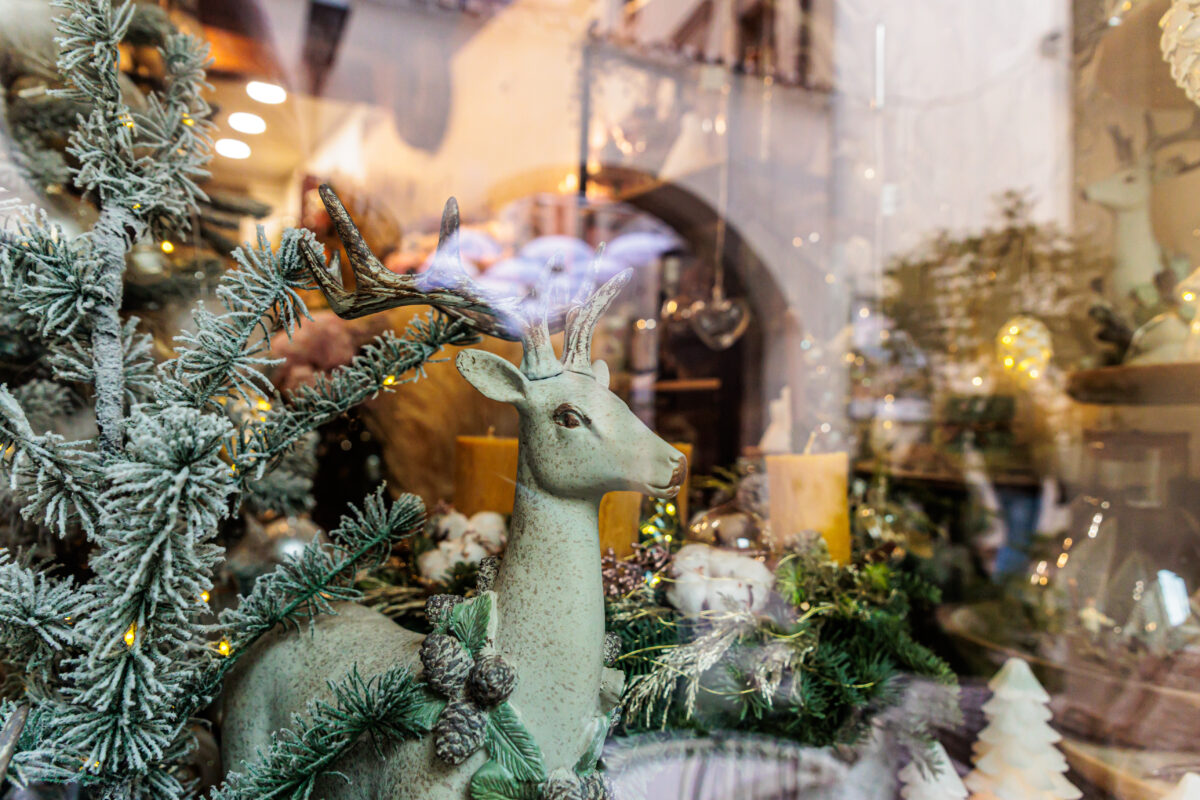
During the holidays, a well-designed holiday window display can be one of a retailer’s best opportunities to catch someone’s attention before they ever walk through the door. And when shoppers are already surrounded by seasonal displays, standing out takes a little more thought than simply adding lights and ornaments.
The best holiday windows feel considered. They draw the eye, give people something worth stopping for, and still feel like a natural extension of the store itself. Whether you’re working with greenery, oversized decor, lighting, merchandise, or a mix of all four, the goal is to create a display that makes people curious about what’s inside.
Let’s talk about how to make that happen.
Key Takeaways
|
In 2016, Bergdorf Goodman turned its holiday windows into a series called Destination Extraordinary. Instead of relying on traditional Christmas imagery, each window became its own surreal little world. One, called The Winter Garden, was filled with oversized insects, tangled botanical forms, cool blue-green lighting, and a mannequin placed right at the centre of it all.
That’s part of what makes memorable window displays work: there’s a clear idea behind them.
You don’t need Bergdorf’s budget to use the same principle. Start with one concept you can describe in a sentence, such as a winter garden, an oversized gift box, a woodland scene, or a beautifully dressed holiday table, and build from there. Greenery, lighting, merchandise, colour, and smaller decorative details should all support that one idea, rather than compete with each other. A winter garden or woodland concept, for example, can be built almost entirely from lifelike greenery, florals and trees, with merchandise tucked into the scene.

A strong holiday window display should work in stages. First, something bold catches the eye from a distance. Then, smaller details give people a reason to keep looking. From there, the display can build enough curiosity to draw someone into the store, or at the very least, leave them with a memorable impression of your brand. In marketing terms, the window is top-of-funnel. You may only have two or three seconds to earn that first glance, so the initial visual impact matters.
Oversized pieces are especially effective at earning that first look. A giant ornament, dramatic bow, sculptural tree, or large-scale floral installation can give the display an immediate focal point and make it easier to understand from a distance. Artificial greenery is especially useful here because trees, garlands and florals can be scaled and shaped to fit the window instead of forcing the design around a standard size.
The goal is not to make everything big. It is to choose one or two elements that deserve attention, then use the smaller details to reward people for looking a little longer.
Once you’ve caught someone’s eye, the next job is to give them something worth discovering. This is where texture, craftsmanship, and unexpected details can do a lot of the work.
For one of its Christmas window installations, Anthropologie hand-painted 1,500 metres of wrapping paper and reused boxes from store deliveries to create mountains of colourful gifts. Then came the part you wouldn’t expect: giraffes, pelicans, zebras, penguins, and parrots, all handmade from materials like wood, paper, fabric, and paint.
There’s a useful lesson here for any retailer. Memorable doesn’t necessarily mean expensive or elaborate. Sometimes it means taking a familiar holiday element and doing something with it that people haven’t seen before. Give them one detail that makes them look twice, and you’ve bought yourself a little more of their attention.
A beautiful window can stop someone on the sidewalk, but the real opportunity is getting them through the door. One way to do that is to make the display feel like the beginning of something rather than the whole experience.
Selfridges took this approach with its 2025 Disney Christmas campaign. The story started outside with interactive windows and a dramatic light display, then continued inside through themed merchandise, performances, and other in-store experiences.
For a smaller retailer, the idea can be much simpler. Repeat a colour, character, material, or decorative element from the window just inside the entrance, then carry it toward a featured product display. That visual continuity gives curiosity somewhere to go and makes the storefront feel connected to the shopping experience inside.
A holiday window display should feel festive, but it should still feel like you.
Tiffany & Co. has been doing this exceptionally well for decades. In its 2015 holiday windows, the brand used miniature theatre sets filled with snowy landscapes, sparkling jewellery, and a palette built around winter white and Tiffany Blue. The scenes were whimsical and seasonal, but you could still recognize the brand before ever seeing the name.
That is a useful test for any retailer. If you removed the logo from your window, would the colours, materials, products, and overall mood still feel connected to your store?
You do not need to abandon traditional holiday elements. Instead, filter them through your existing visual identity. A familiar wreath, tree, or gift display becomes much more memorable when the colour palette, styling, and details could only belong to your brand.
Your window doesn’t live on a mood board. Most people will first see it from across the sidewalk, at an angle, while they’re already moving.
Before calling your holiday window display finished, step outside and approach it the way a customer would. Can you tell what the focal point is from a distance? Does the merchandise disappear behind the decor? Do reflections in the glass become distracting? And what happens after dark, when the lighting inside the window suddenly matters much more?
It’s worth checking from both directions and at different times of day. A display can look beautiful from three feet away and lose much of its impact from the street. Designing from the outside in helps make sure the details you worked so hard on are actually being seen.
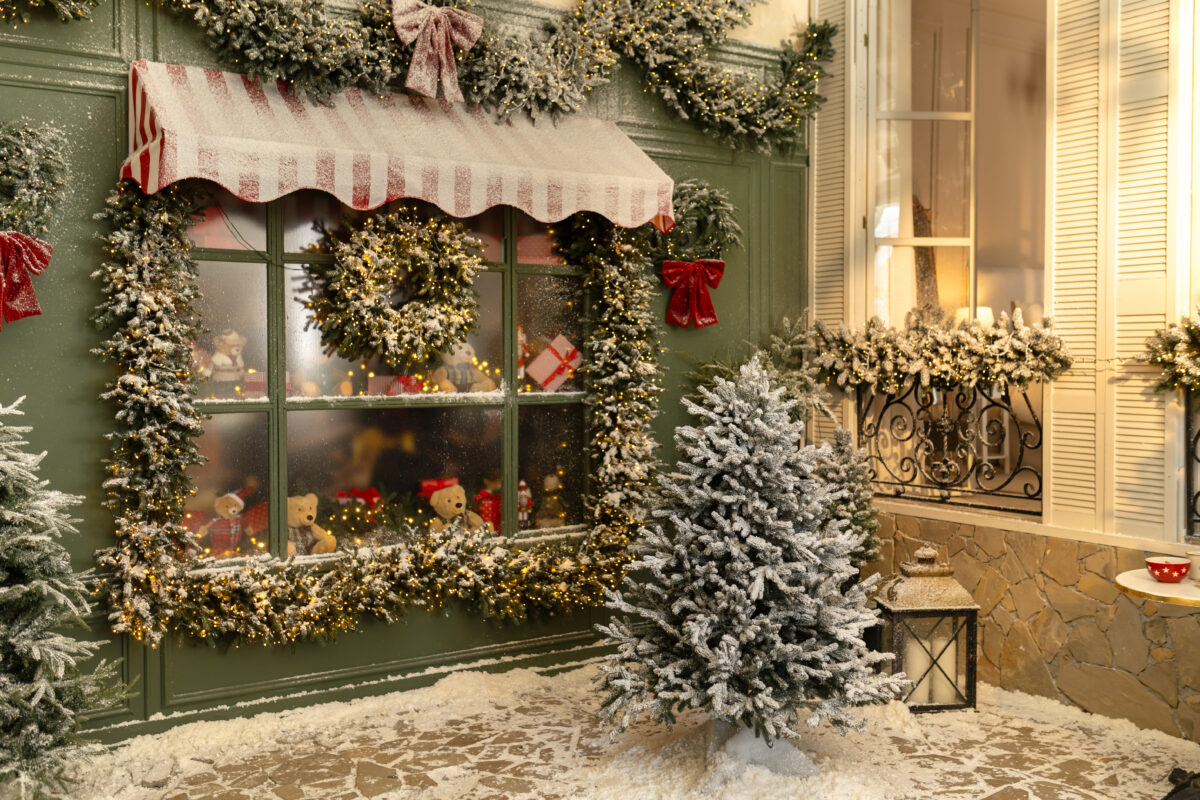
A: Earlier than you might think. Custom pieces, fabrication, installation logistics, and seasonal demand can all add lead time, so planning well before the holiday rush gives you more creative flexibility.
A: A strong display usually has one clear idea, a focal point that reads from a distance, and enough detail to reward a closer look. It should also feel connected to the store’s brand and give customers a reason to keep engaging.
A: Absolutely. High-quality artificial greenery can create a full, polished look without the maintenance concerns that come with live plants, especially over a long holiday season.
A: Yes, and it often makes sense to design with reuse in mind. Larger statement pieces, greenery, lighting, and structural elements can often be refreshed with new colours, styling, or smaller decorative details from year to year. Lifelike greenery and statement pieces are especially easy to restyle this way, and some providers, including Greenscape, store them off-site between seasons.
A strong holiday window display earns attention, builds curiosity, and makes the store feel worth stepping into.
For retailers planning a larger seasonal display, Greenscape can support the process from custom design and planning through installation, takedown, and off-site storage, with seasonal rental options also available.
Ready to start planning your holiday display? Contact Greenscape to talk through your space, ideas, and seasonal goals.
2025 © Greenscape Design & Décor | Privacy Policy | Terms and Conditions

