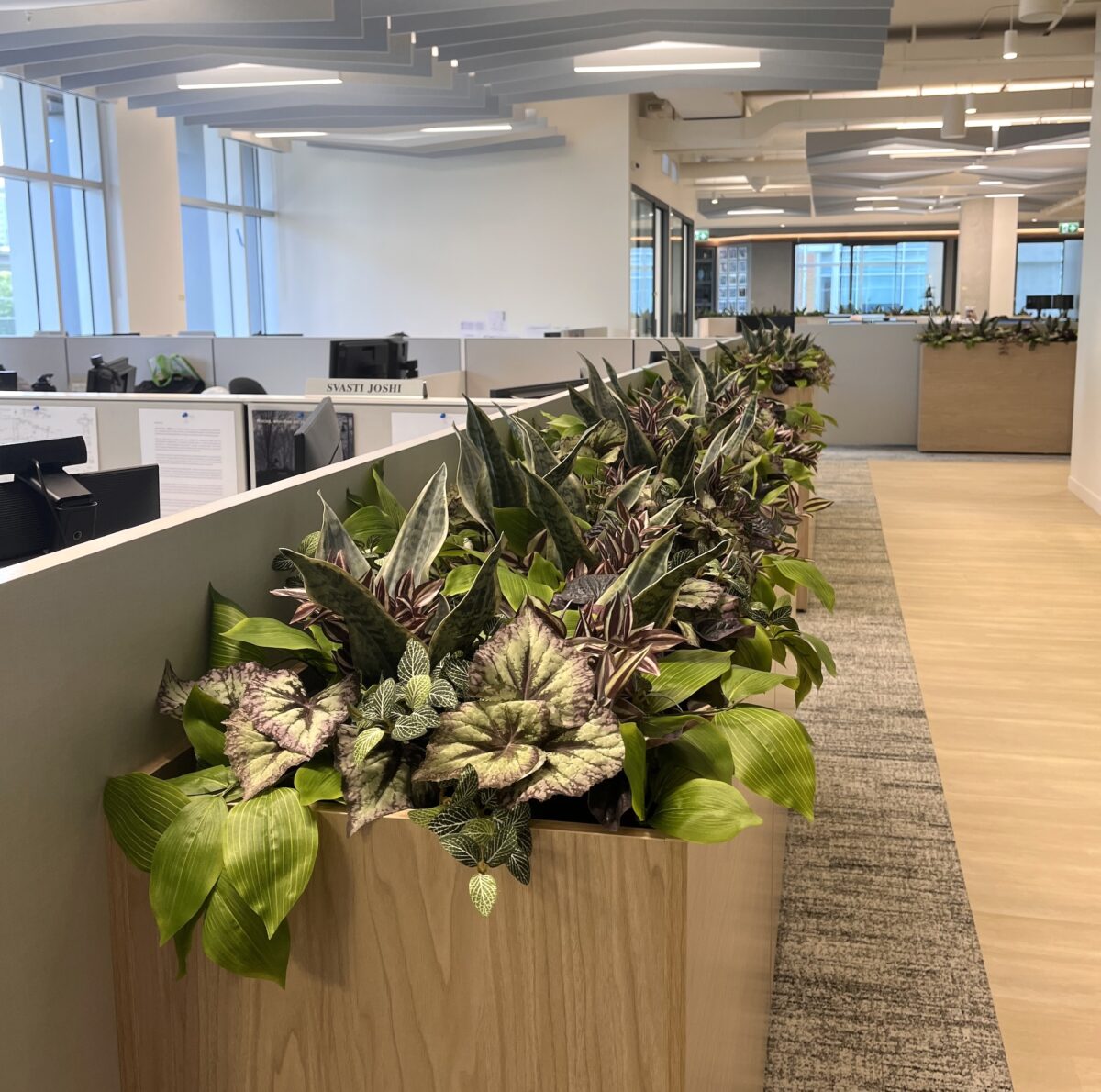
Biophilic office design has moved from a niche architectural concept to a mainstream priority for companies looking to improve how their workspaces look and feel. By integrating natural elements into built environments, businesses are creating offices that not only look better but also support the people who work in them every day.
Artificial greenery has become one of the most practical ways to achieve this effect. It delivers the visual warmth and organic texture of nature without the maintenance demands of live plants, making it a strong fit for offices where ongoing maintenance isn’t feasible or where consistent, year-round appearance matters.
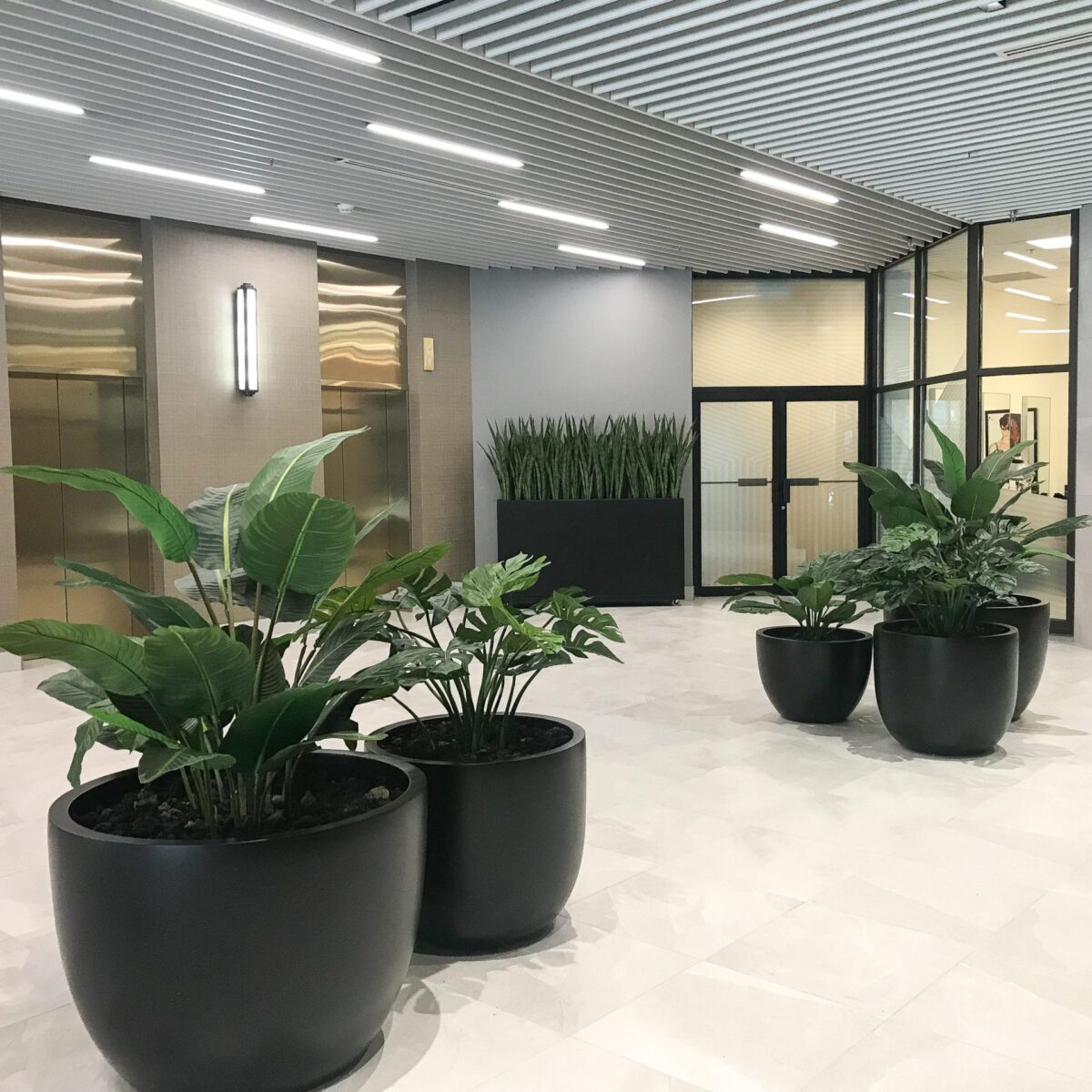
Biophilic office design is an approach to workspace planning that introduces natural elements into the built environment to strengthen the human connection to nature. The term "biophilia" refers to the innate human tendency to seek connection with living systems, and biophilic design applies this idea to architecture and interiors. In office settings, this typically means incorporating greenery, natural materials, daylight, and organic forms into the layout and finishes. Green walls, artificial trees, moss panels, and custom greenery accents are among the most visible expressions of this design philosophy.
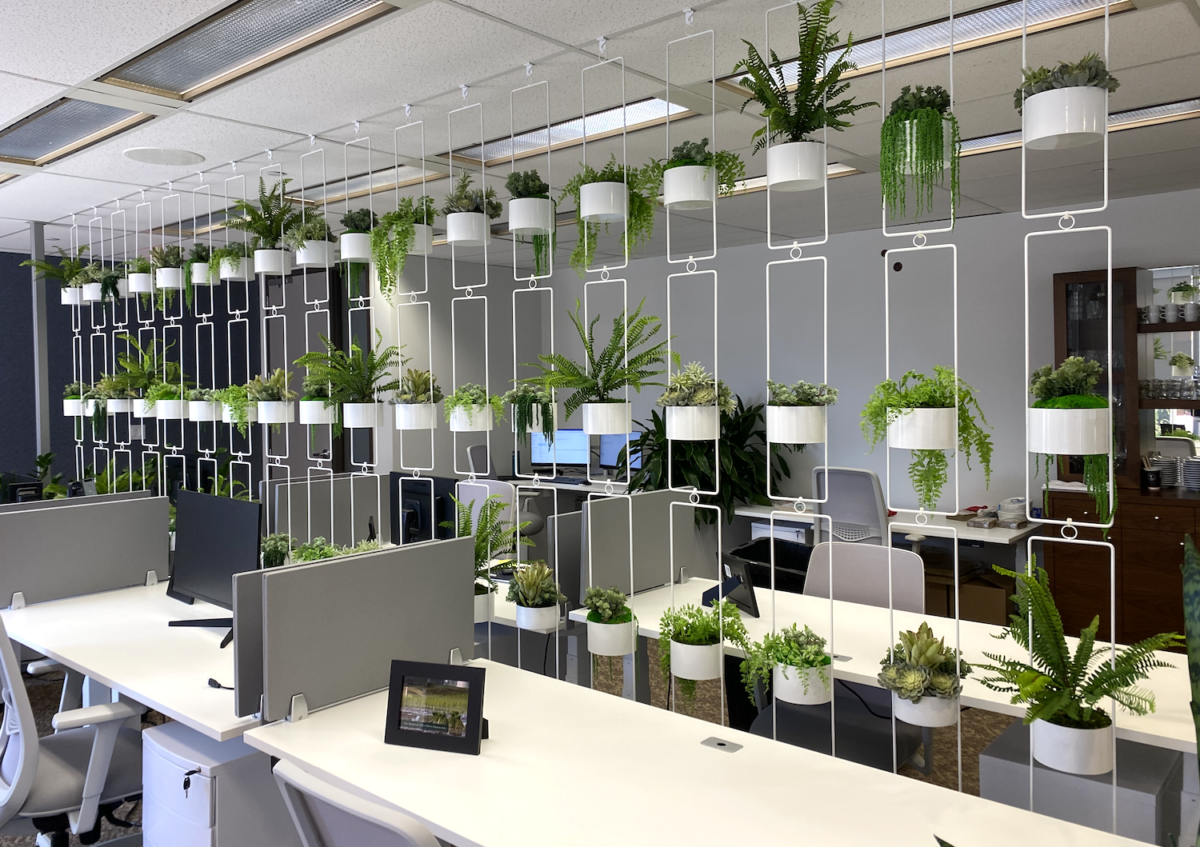
Biophilic design trends reflect a broader change in how companies think about the office environment. Businesses increasingly recognize that the physical workspace influences mood, focus, and how employees and visitors perceive the organization.
A well-executed biophilic design signals that the company has invested in the quality of its environment, which resonates with both employees and clients. For industries where talent attraction and client impressions matter, the look and feel of an office has become a meaningful differentiator.
Green elements also address a practical challenge in many commercial interiors: how to add warmth and texture to spaces dominated by glass, concrete, and neutral tones. Workplace greenery introduces organic form and visual contrast without structural changes to the space.
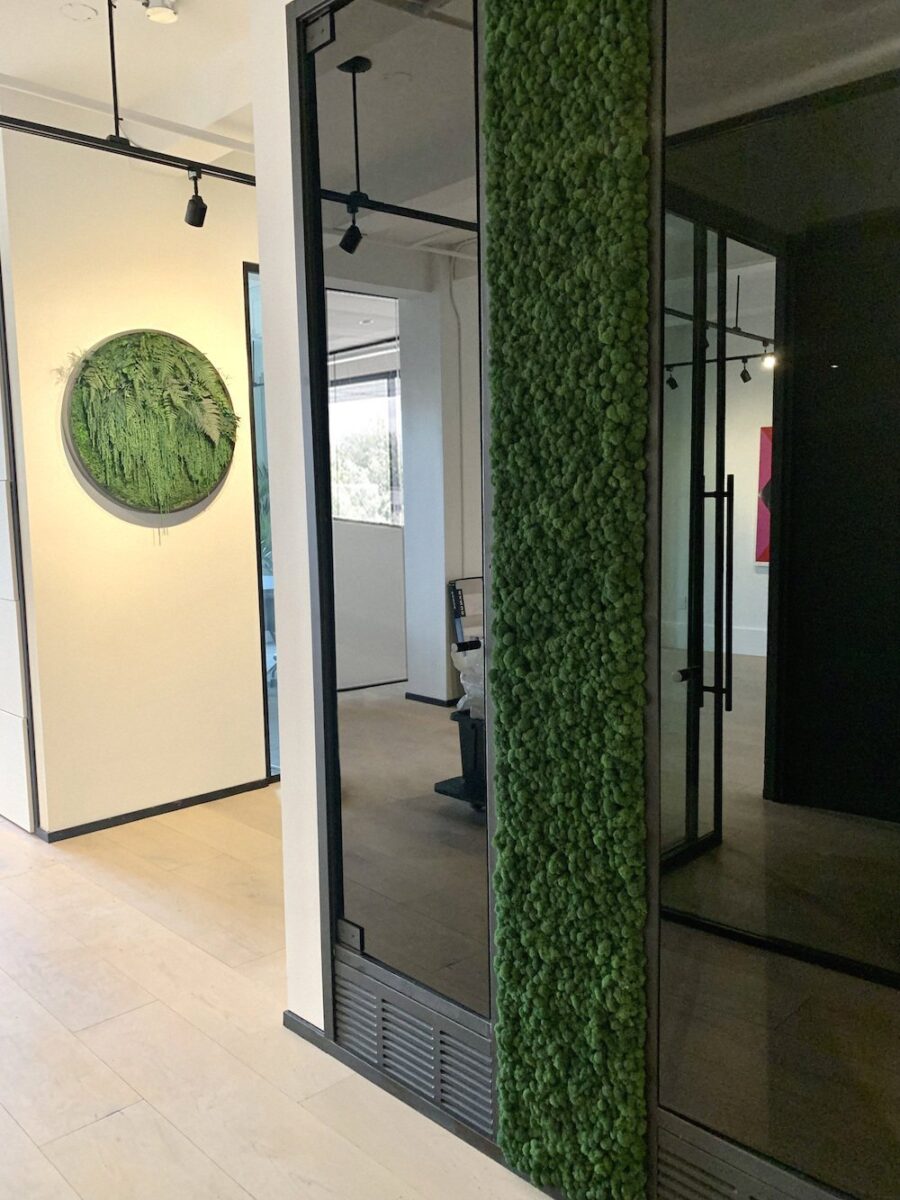
Artificial greenery has become a preferred solution for biophilic office design because it combines visual authenticity with long-term practicality. Modern commercial-grade artificial plants for offices are designed to closely replicate the look and feel of living species, with detailed leaf structures and natural colour variation.
For office environments, this matters for several reasons:
These qualities make artificial greenery a reliable choice for permanent installations in corporate offices, professional services environments, co-working spaces, and mixed-use commercial buildings.
The most effective biophilic office design integrates greenery in ways that respond to how the space is actually used. Common applications include:
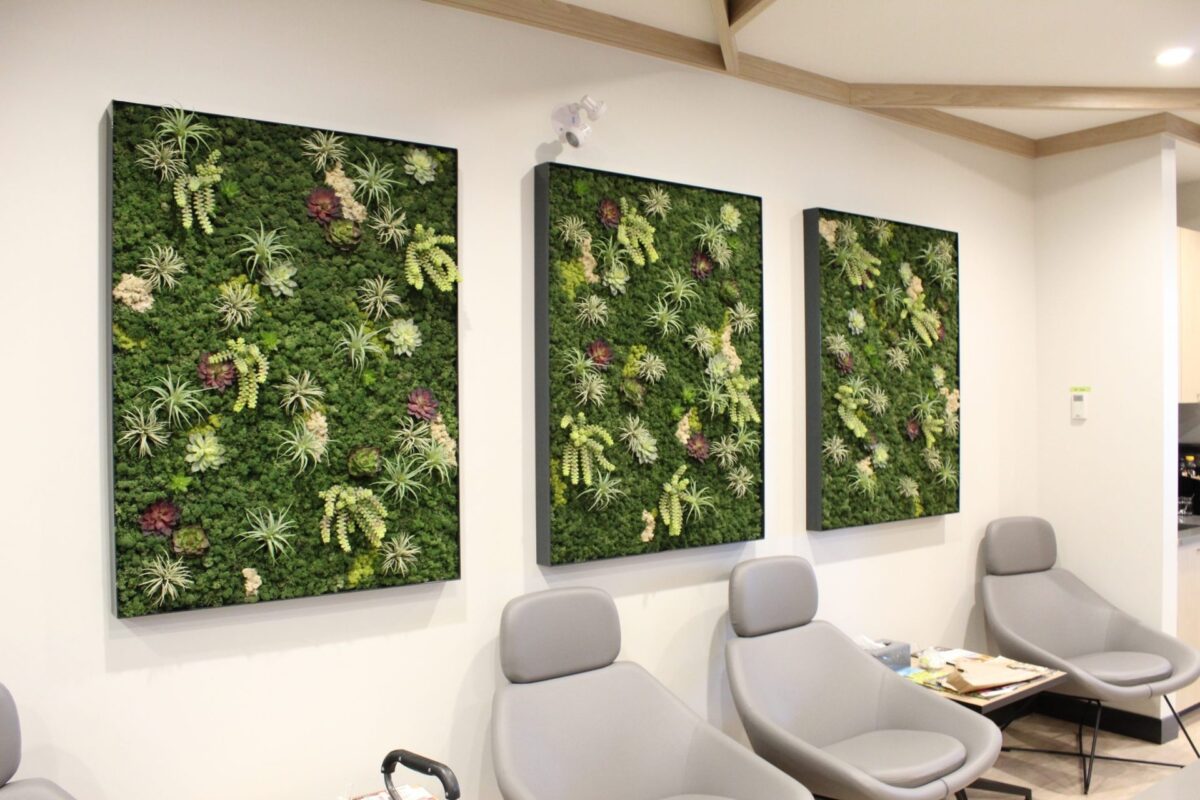
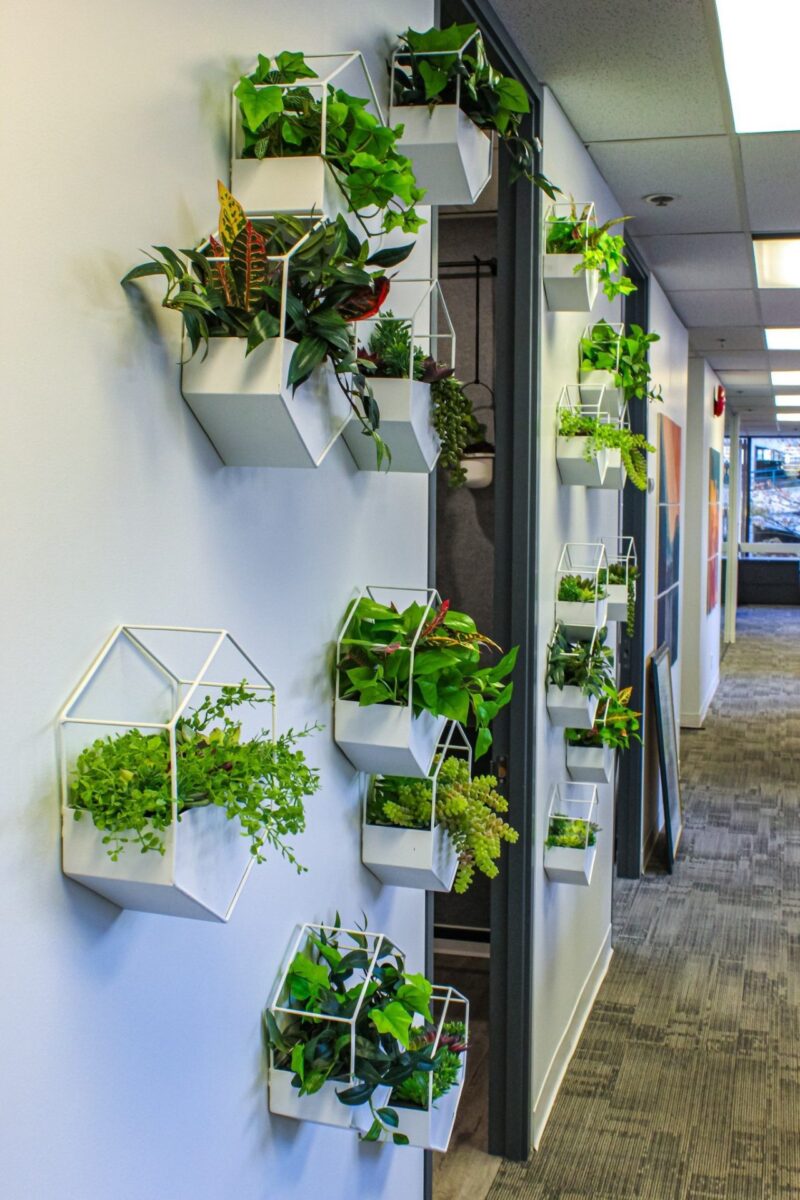
Vertical installations turn underused wall surfaces into focal points. Green walls are particularly effective in reception areas, boardrooms, and open-plan offices where a single design feature needs to anchor the room. Moss panels offer a more textural, minimalist alternative suited to contemporary office aesthetics.
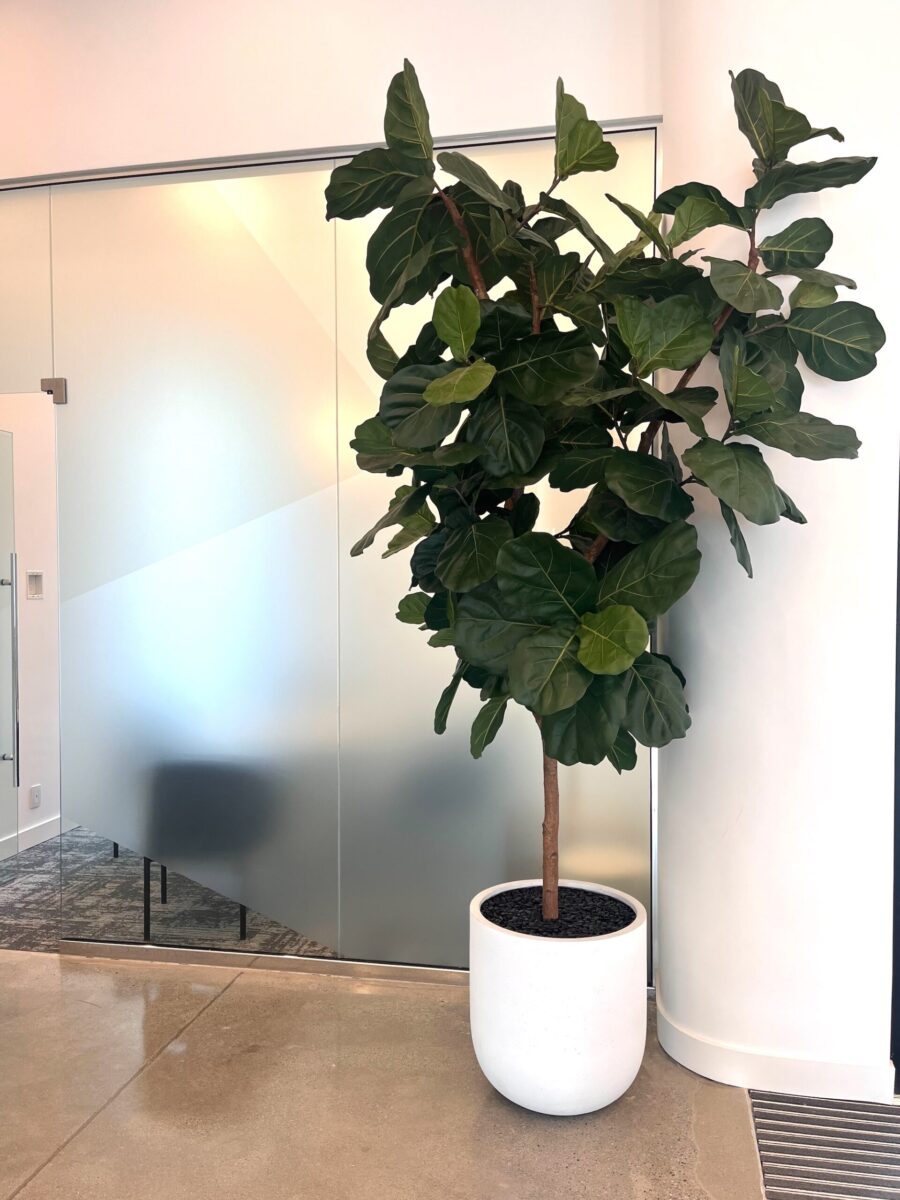
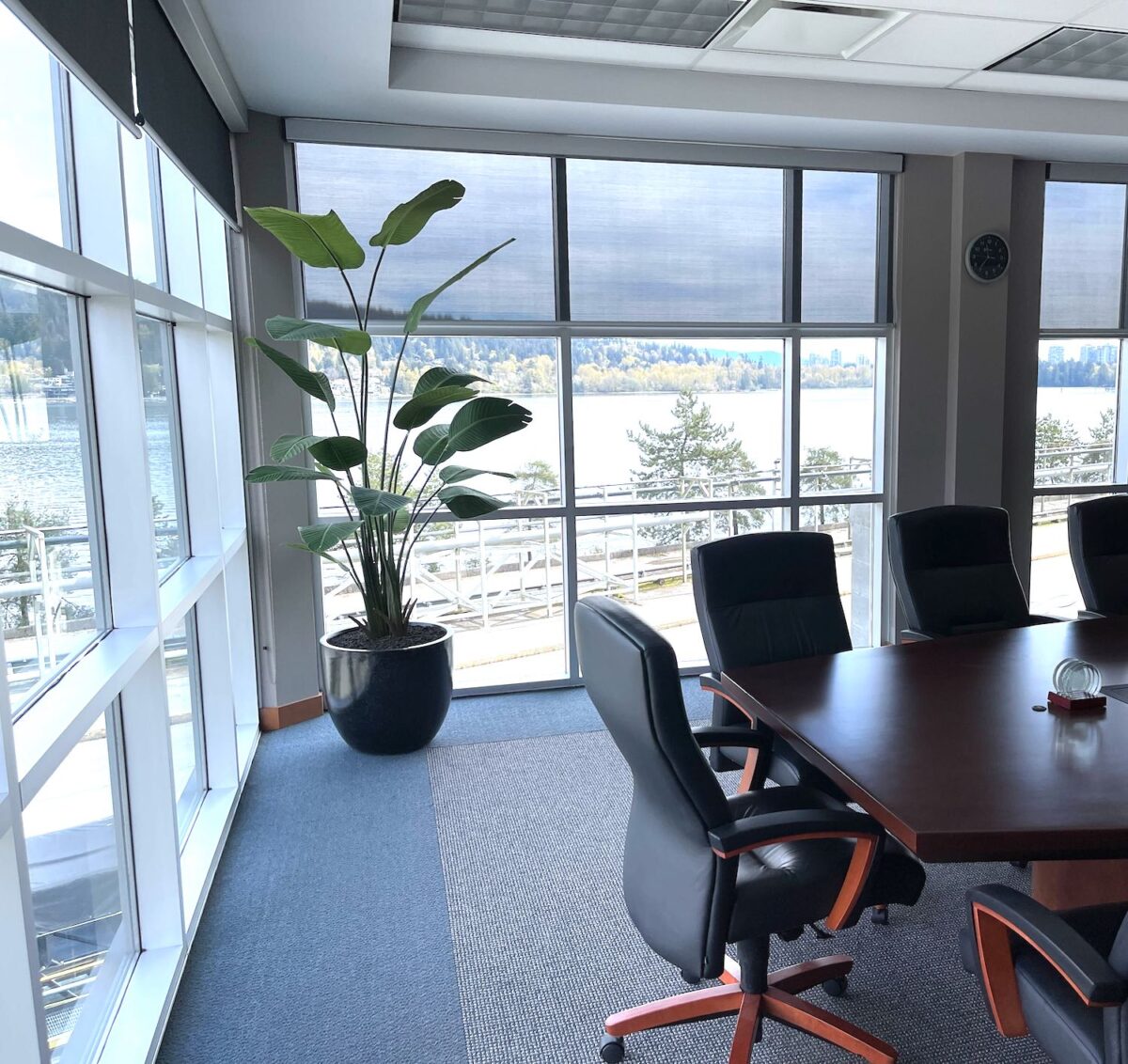
Oversized statement trees placed in atriums, lobbies, or open office areas introduce scale and a sense of immersion. They work well in double-height spaces or corners that need visual weight without permanent construction.
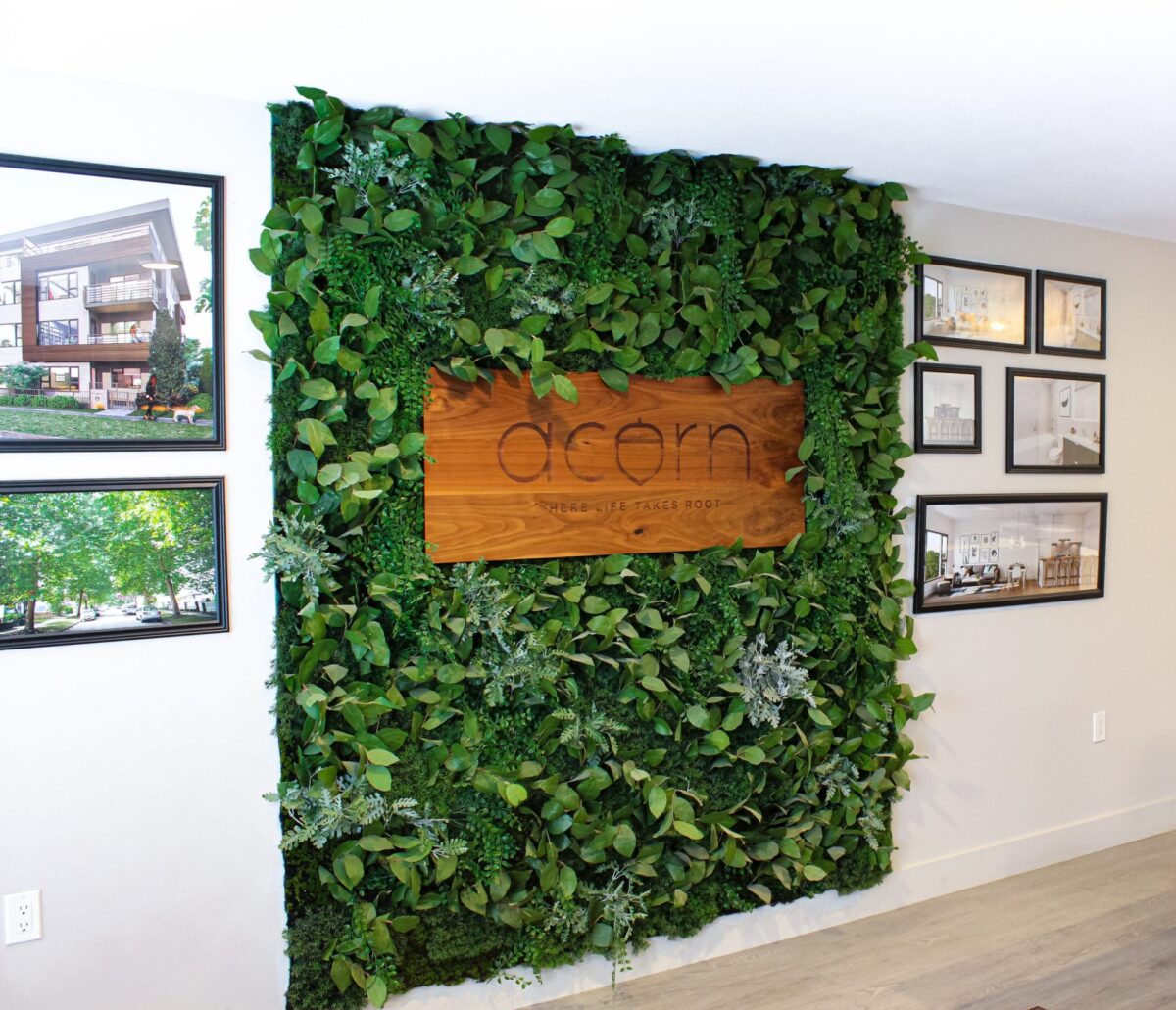
Incorporating a company logo, wordmark, or colour palette into a greenery installation turns the wall into both a biophilic element and a brand asset. These are common in reception areas and spaces used for client meetings or media appearances.
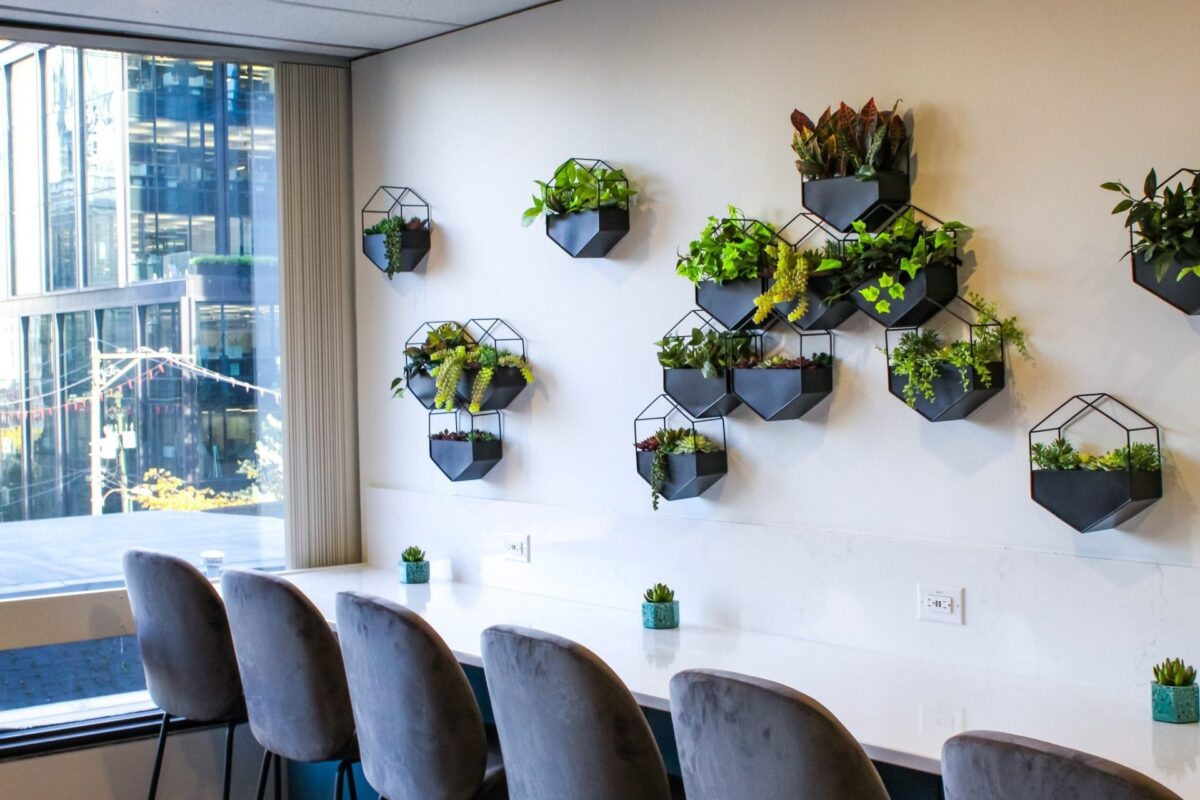
Smaller-scale placements throughout the office, at workstation dividers, beside seating areas, or near entryways, build on the biophilic effect at a more accessible scale.
One consideration often overlooked in biophilic office design is the difference between short-term installation cost and total cost over time. Live plant installations can appear more affordable upfront, but ongoing maintenance, replacement, irrigation, and lighting requirements add up significantly over months and years.
Artificial greenery, when sourced from a commercial supplier and professionally installed, is built to last. High-quality materials maintain their appearance for years without degrading, fading, or requiring replacement. For businesses making a permanent commitment to their office environment, this makes artificial greenery a more predictable and cost-effective investment.
Yes. One of the main advantages of artificial greenery in office settings is that it performs independently of light conditions. It is well-suited to interior meeting rooms, hallways, and enclosed spaces where live plants would not survive.
Commercial-grade artificial plants are manufactured to closely mimic living species in detail, colour, and texture. When professionally installed and styled, they are difficult to distinguish from live plants in most commercial settings.
Yes. Custom fabricated greenery installations can incorporate branded elements, specific colour palettes, or unique forms tailored to the space. This is a popular approach for reception areas and client-facing environments where brand consistency matters.
The most successful biophilic office design projects share a common foundation: they are planned with the space's function, brand identity, and long-term use in mind. Greenery works best when it is integrated into the overall design, not added as an afterthought.
Greenscape Design & Decor designs, fabricates, and installs custom artificial greenery solutions for commercial offices across BC and Alberta. Whether the project calls for a full green wall, moss panels, statement trees, or a branded installation, our team builds permanent, low-maintenance features tailored to the space, the brand, and how the office is actually used.
2025 © Greenscape Design & Décor | Privacy Policy | Terms and Conditions

